Past Projects
CalHeatScore
About the Tool
The California Communities Extreme Heat Scoring System (CalHeatScore) is designed to help Californians stay healthy when temperatures rise by:
Forecasting upcoming heat waves
Helping people prepare and plan for extreme heat events
Providing information about local resources
CalHeatScore, developed by the California Environmental Protection Agency’s Office of Environmental Health Hazard Assessment (OEHHA), uses historical climate, forecasted weather, and health data to score heat events based on their intensity and potential health impacts. Every day, CalHeatScore creates an easy-to-understand scale of 0 to 4 for all ZIP codes in California to communicate heat risks. CalHeatScore connects people to locally relevant resources, like cooling centers, so that they can be prepared when dangerous heat occurs.
Cohort Consultation
From July-October 2025, we gathered feedback on the CalHeatScore Tool by working with community experts who provided local knowledge and recommendations to improve the tool and enable its use within communities most vulnerable to heat. The UCLA Luskin Center for Innovation is incorporating this feedback into a User Guide that provides general guidance to accompany the use of the CalHeatScore tool.
Cohorts focused on three groups vulnerable to heat illness:
Outdoor & Warehouse Workers
Older Adults
California Native Tribes




Webinar Series
CalHeatScore Webinar #5:
Training Materials and Resources for Users
January 28, 2026

Project Partners
CalHeatScore Webinar #6:
Looking Ahead to Summer 2026
March 4, 2026
CalHeatScore Webinar 1:
Introduction to CalHeatScore
June 12, 2025
CalHeatScore Webinar 2:
Heat Warning Systems & CalHeatScore Development
July 24, 2025
CalHeatScore Webinar 3:
State Agency Partners & Review
October 15, 2025
CalHeatScore Webinar 4:
CalHeatScore as an Extreme Heat Planning Resource
November 12, 2025
LARC worked with the Office of Environmental Health Hazard Assessment (OEHHA) and the Governor's Office of Land Use and Climate Innovation (LCI) to create a space for community experts to share ideas on how CalHeatScore can be integrated into existing extreme heat practices and used these recommendations to develop CalHeatScore training materials.
The UCLA Luskin Center for Innovation developed a heat warning system guide, which incorporate findings from the user cohorts.
Multi-Objective Assessment of Flood Adaptation Options in Los Angeles County
About the Project
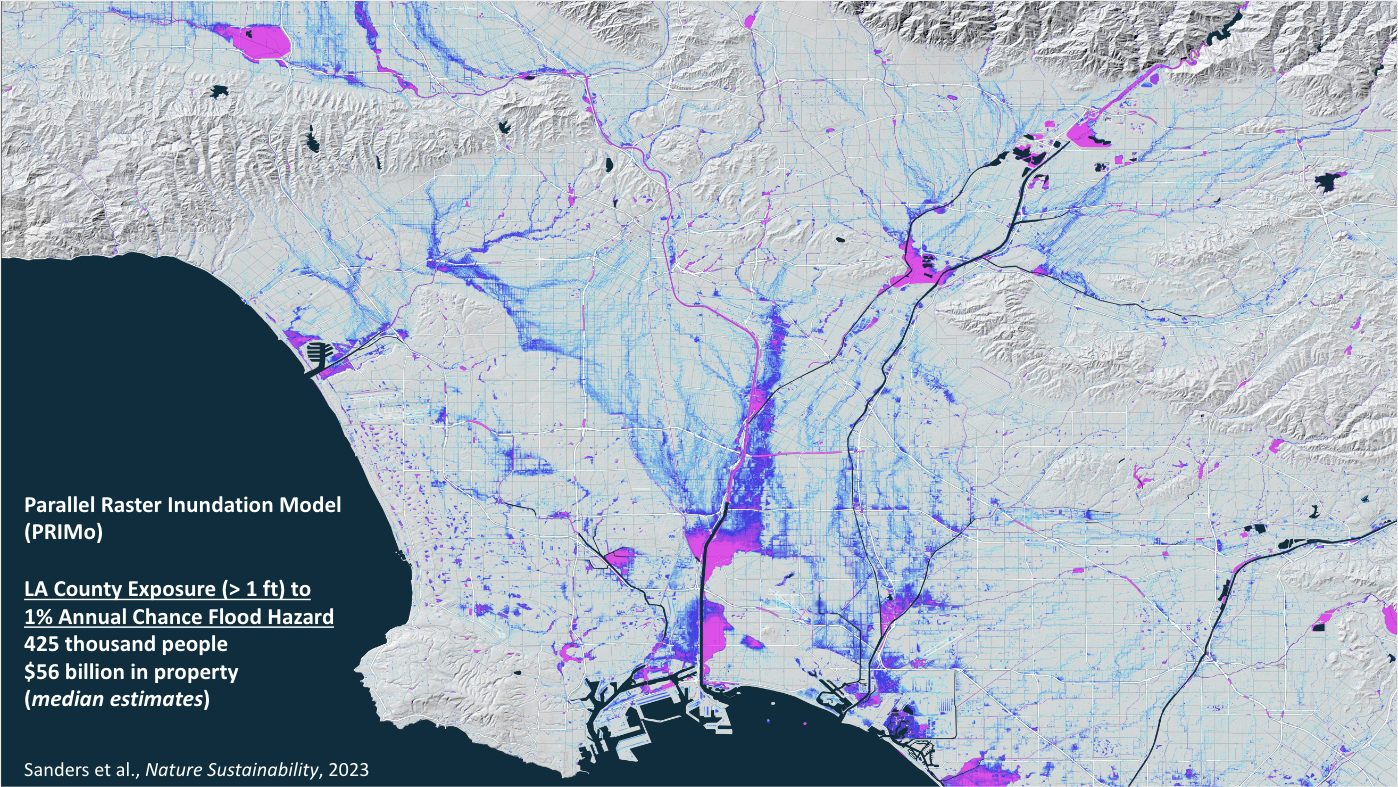
Los Angeles County, home to 10 million people and a $712 billion annual economy, faces flood risks 20 times greater than suggested by federally defined floodplains, and Black, Hispanic, and disadvantaged populations are disproportionately exposed to these risks. There is a need for transformative flood infrastructure that simultaneously reduces flood risk, captures more stormwater, restores impaired ecosystems, builds climate resilience across the region, and advances equity.
This project will simulate three flood adaptation approaches:
Raising levees
Widening rivers with habitat restoration
Capturing additional stormwater with more green infrastructure and parks
Researchers will then analyze the costs and benefits of each to provide actionable information to regional government.
The project is led by Dr. Brett Sanders at the University of California, Irvine, in collaboration with Dr. Katharine Mach at the University of Miami, and is funded through the NOAA Effects of Sea Level Rise (ESLR) Program. Read more about the project via NOAA and media coverage from LAist.
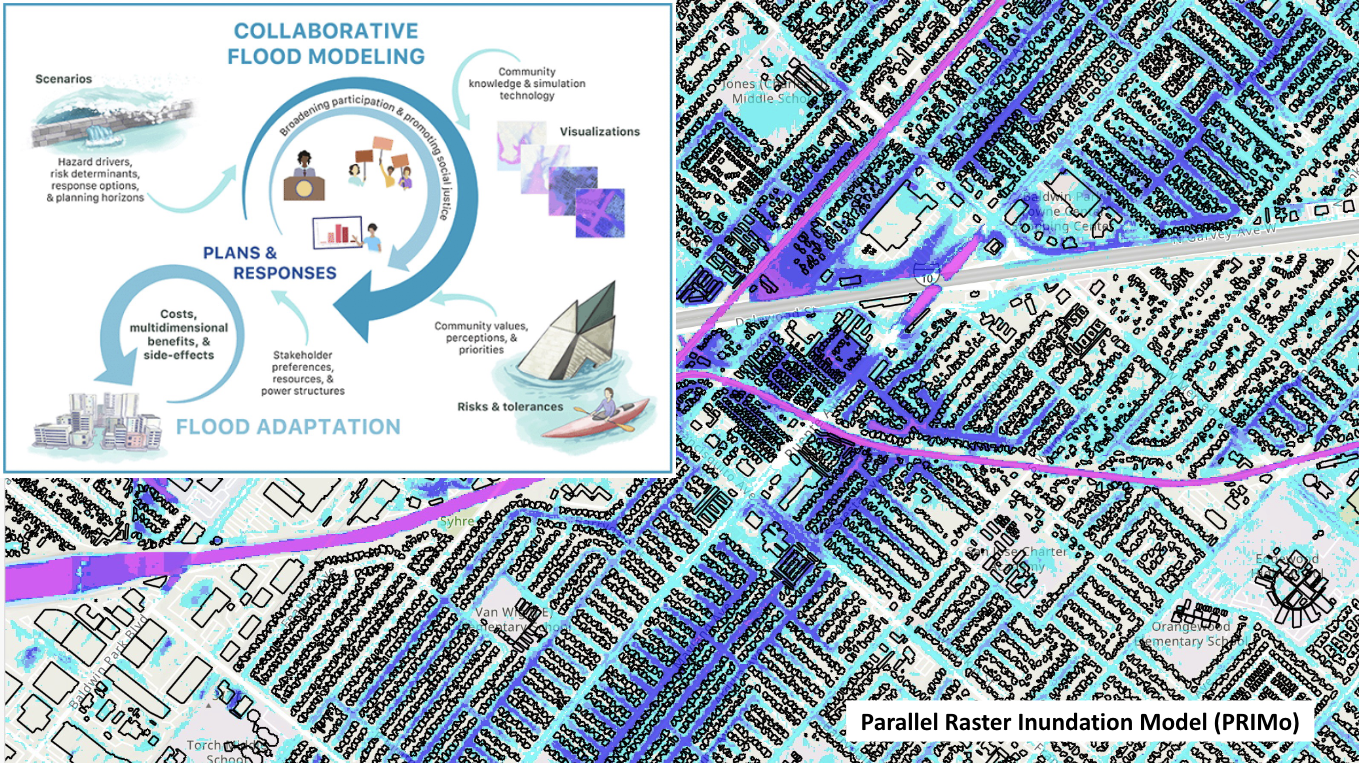
In 2024 and 2025, LARC hosted a series of workshops to facilitate the co-creation of the three county-wide flood risk adaptation strategies: raising levee, widening channels, and capturing stormwater.
Research Team
UC Irvine


University of Miami


Workshop Series

February 8, 2024
Project Design & Timeline Stormwater Capture & Channel Widening Strategies
Building on our success with the Extreme Heat Campaign, LARC launched a Clean Energy Education Campaign to create and distribute content in the Los Angeles region to promote more sustainable energy usage. LARC used its April 2024 Network Meeting to gather input on the topics to ensure our materials are relevant to and will reach communities who most need access to energy programs. Potential topics include energy conservation, off-peak consumption, energy efficiency upgrades, utility assistance programs, clean energy jobs, and the health benefits of electrification.


Strategic Pathways and Analytics for Tactical Decommissioning of Portions of Natural Gas Infrastructure in Southern California
In 2022-2023, RAND's Dr. Kelly Klima led a research team to develop a community-level, stakeholder-informed, multi-disciplinary and objective analytical framework to identify locations in Southern California where natural gas decommissioning with service replacement via electrification can occur in a just, equitable, and cost-effective way. The project accomplishes three goals:
It articulates an analytical framework for the process of selecting decommissioning sites.
It offers guidelines based on that framework to inform future decommissioning site selections.
It identifies three sites in the City of Santa Monica and two in the City of Long Beach and provides preliminary estimates of some costs and benefits associated with decommissioning there.
LARC provided support for project interviews and workshops with varied experts and stakeholders. Those activities identified decision criteria and equity concerns relevant to site selection, emphasizing the importance of community engagement and communications in decommissioning efforts. Learn more about the project in the Project Closeout Meeting Presentation.
How to Select Strategic Pilot Sites to Decommission Portions of Natural Gas Infrastructure in Southern California

The LARC has crafted a county-wide climate action plan to reduce greenhouse gas emissions and prepare the region to adapt to the impacts of climate change. Known as "A Greater L.A.: Climate Action Framework," this effort is a multi-year process to integrate numerous county-wide and jurisdiction-specific efforts with best practices and model ordinances that ensure a resilient and vibrant future for our communities.
Visit the Climate Action Framework site to learn more.
LA's Climate Future: What Climate Change Means for Los Angeles
Global climate models are relatively coarse in resolution and provide little information about climate and climate change at scales most relevant to people and ecosystems. Dr. Hall's climate modeling is used to understand the forces shaping climate at the Los Angeles regional scale. Climate studies will include: temperature, snow fall, precipitation, Santa Ana winds, hydrology, sea level rise, and Sierra Nevada snow pack.
To learn more, visit the Climate Change LA website.
2015 OPR General Plan Guidelines Updates
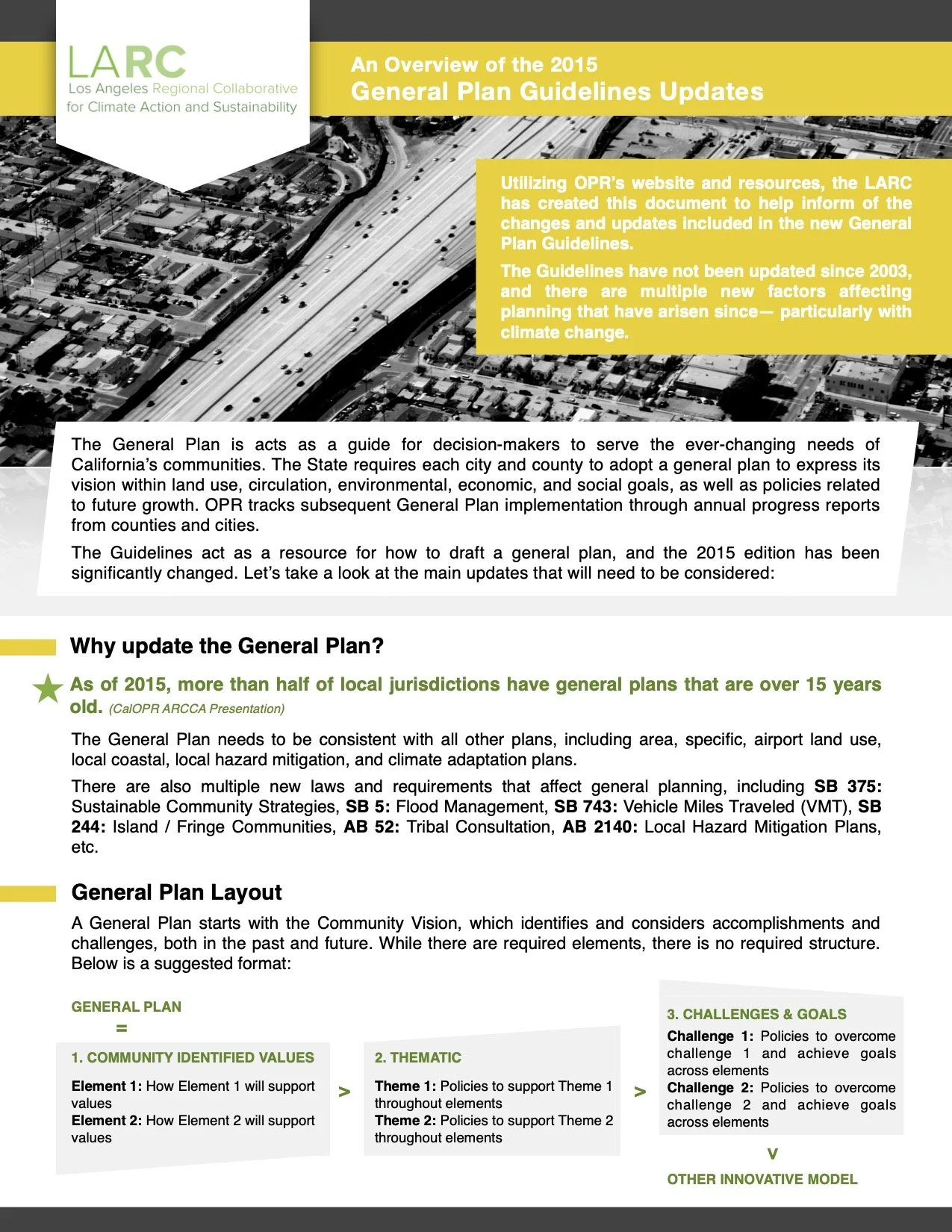
In 2015, LARC participated in utilizing our Framework as a resource to assist the development of the General Plan Guidelines of California’s Office of Planning and Research (currently known as the Office of Land Use and Climate Innovation). The General Plan is essential towards a shared vision for the state, with the Guidelines themselves serving as a resource for regions to draft their own general plans.
LARC’s Framework for Regional Climate Action and Sustainability specifically served as a tool to inform the updates to the Los Angeles regional updates.

In 2018, LARC and the Los Angeles County Internal Services Division Office of Sustainability, released 2010 community GHG inventories for every city in LA County as well as County unincorporated communities. These data serve as a baseline and starting point for critical climate action planning work that must occur throughout the region to comply with the mandates set forth in AB 32 – the Global Warming Solutions Act.
Cities may obtain their 2010 inventory data by contacting their council of governments (COG) or LARC.
To learn move, view the LA County GHG Inventory informational guide.
LARC Convening on Transportation and Land Use
The following report comes from LARC's Convening on Transportation and Land-Use that was held in the Annenberg Beach house in December of 2016. The Convening was held over two-days where local leaders responded to the issues faced in Los Angeles and the solutions that can be brought forth through collaboration within their industries. Read the high-level summary of the convening: LARC Transportation and Land-Use.
In 2013, the County of Los Angeles Public Health Department developed a comprehensive workshop series to transform our workforce into climate change ambassadors. Interested in adapting the workshop series for your own staff?
Visit the LA Climate and Health Workshops page for presentations, slides and guides for brainstorming activities
Periodic Reports
Each year is a transformative year for the LARC, with the adoption of new governance documents and cultivation of new partnerships throughout the region. The Annual Report provides a summary of the Los Angeles Regional Collaborative for Climate Action and Sustainability’s current efforts – and the efforts of its supporters and partners. Our primary goal is to build local capacity in the Los Angeles Region to take climate action, resulting in a more sustainable and resilient LA.
View and download LARC's 2014 Annual Report
View and download LARC's 2011 Annual Report
View and download LARC’s 2024 Annual Report